Multiple Personality Disorder: Understanding Dissociative Identity Disorder
Dissociative Identity Disorder
Multiple Personality Disorder, now known as Dissociative Identity Disorder (DID), is a mental health condition in which a person experiences two or more distinct identity states or personality states. These different states may have different ways of thinking, behaving, remembering, and responding to situations.
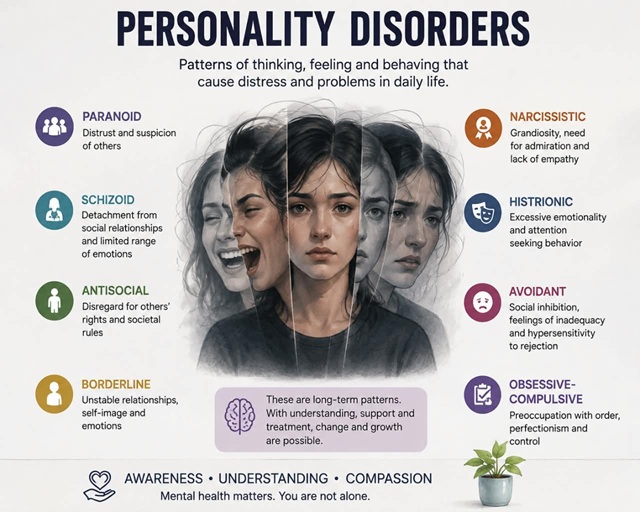
What Causes DID?
DID is often associated with severe or repeated trauma, particularly during childhood. When overwhelming experiences are difficult to process, the mind may use dissociation as a way of coping. However, not everyone who experiences trauma develops DID.
Common Signs
Some possible signs include: Memory gaps or forgetting important events Feeling disconnected from yourself or your surroundings Different identity states with noticeable changes in behaviour Confusion about personal identity Feeling as though you are watching yourself from outside your body Difficulty managing emotions and relationships Is It the Same as Mood Swings? No. Mood swings involve changes in emotions, while DID involves disruptions in a person's sense of identity and memory. DID is also different from schizophrenia. Schizophrenia primarily involves symptoms such as hallucinations, delusions, or disorganized thinking.
Can DID Be Treated?
Yes. Treatment usually focuses on creating safety, understanding traumatic experiences, improving emotional regulation, and reducing distressing symptoms. Psychotherapy with a qualified mental health professional is commonly used. Recovery is possible, although treatment may take time. Remember People living with DID are not “crazy” or pretending. They are experiencing a complex mental health condition that deserves understanding, compassion, and professional support. Mental health awareness begins with listening without judgment.